
Two Pages Custom Shower Curtain: Designer Tips, Sizing & Installation
The bathroom design mistake I see most often? The shower curtain. It might seem like a simple detail, but the wrong size shower curtain can throw off the proportions of an otherwise beautiful bathroom. It stands out in the worst way. Gorgeous tile, timeless fixtures, classic lighting… then a standard shower curtain hanging awkwardly low with a giant gap above the floor. Once you notice it, you can’t unsee it! I’ve always approached shower curtains the same way I approach window treatments. They should feel tailored and proportional to the room. When I discovered Two Pages now offers custom shower curtains, I wanted to try one. If you’re considering a Two Pages custom shower curtain, here’s exactly how I measured, installed, and styled mine, plus the designer tricks I use to make every bathroom feel a little more custom.
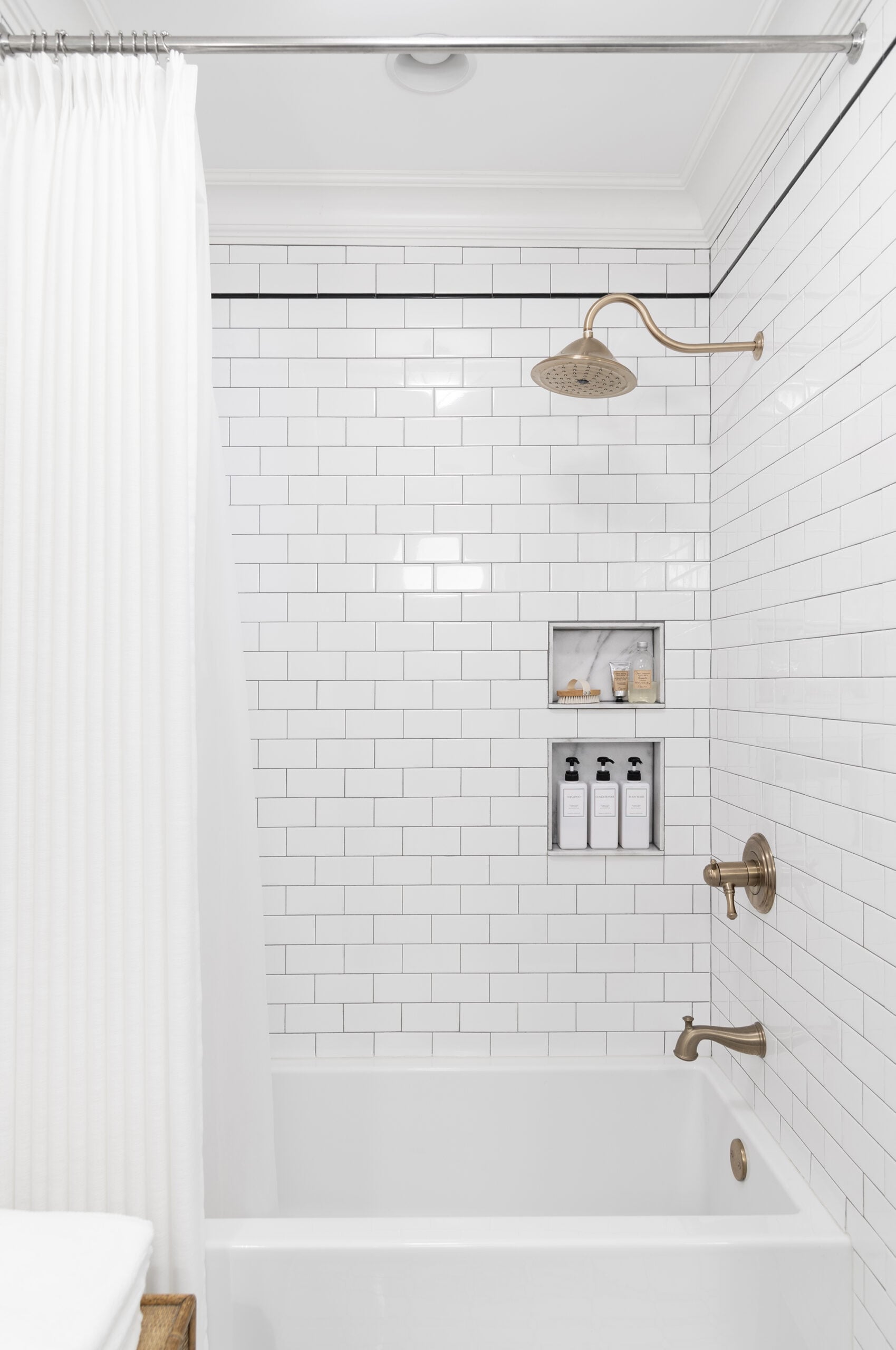
Typically, I’d make my own shower curtain or customize drapery panels… remember my extra long shower curtain DIY from way back when? Well, that was before retailers started catching onto the fact people would prefer longer shower curtains that better fit their bathrooms for that custom aesthetic I mentioned. Two Pages has been on my radar for a while now, so this seemed like an easy first buy…
Why I Avoid Standard Shower Curtains
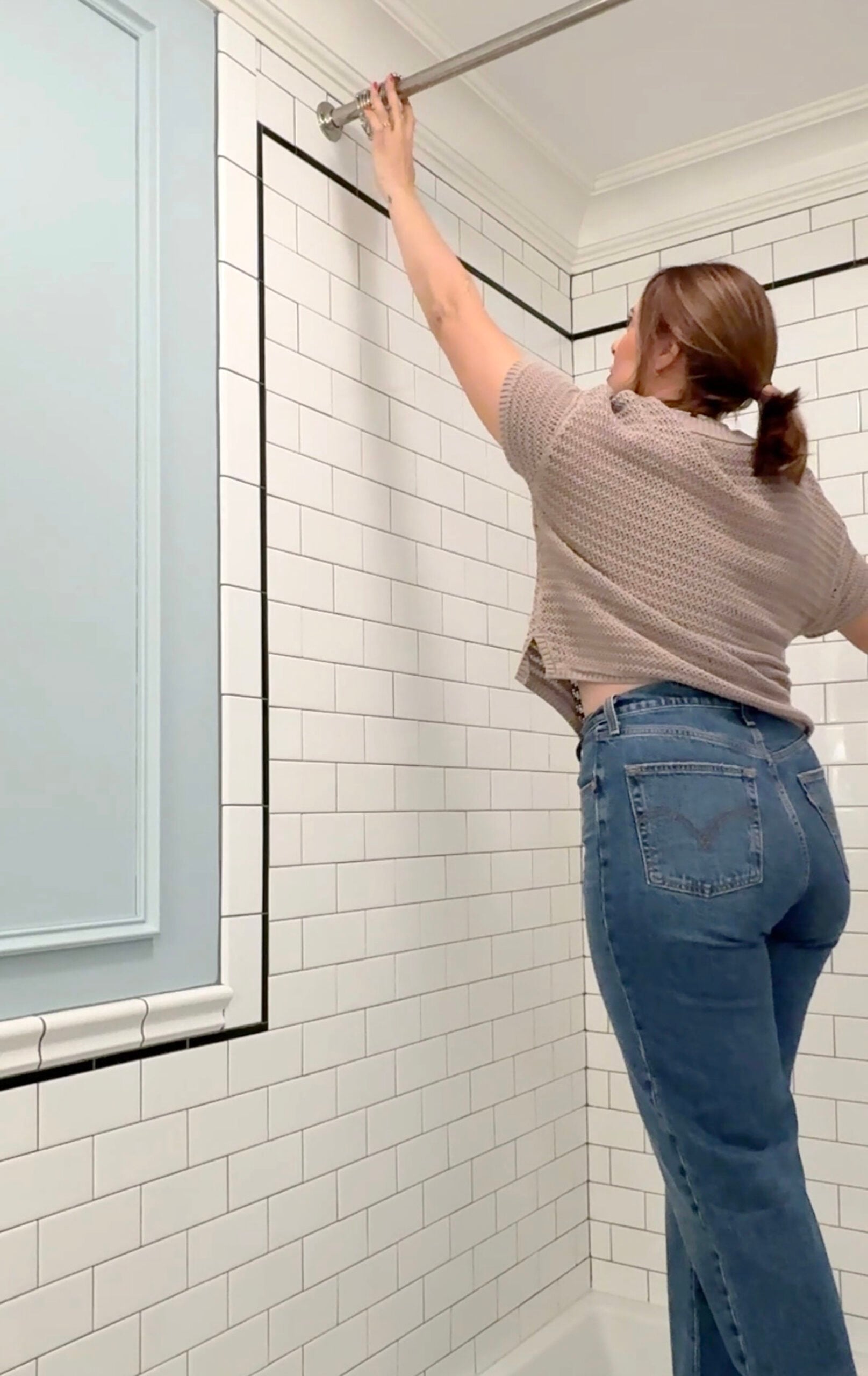
All readymade shower curtains are the wrong size. Why? I have no idea, but a standard 72 inch shower curtain is not the move. In today’s homes, especially with 9 foot ceilings, they often look extremely undersized. Even in older homes, they’re usually installed lower than they need to be because the curtain simply isn’t long enough. The result is a bathroom that feels shorter than it actually is. Whenever I walk into a bathroom, my eye naturally travels upward. If the shower curtain stops too low, it creates a hard visual break that makes the entire room feel squatted and smaller. That might sound like a tiny detail, but good design is often just a collection of small decisions that work together.
My Designer Rule for Shower Curtains
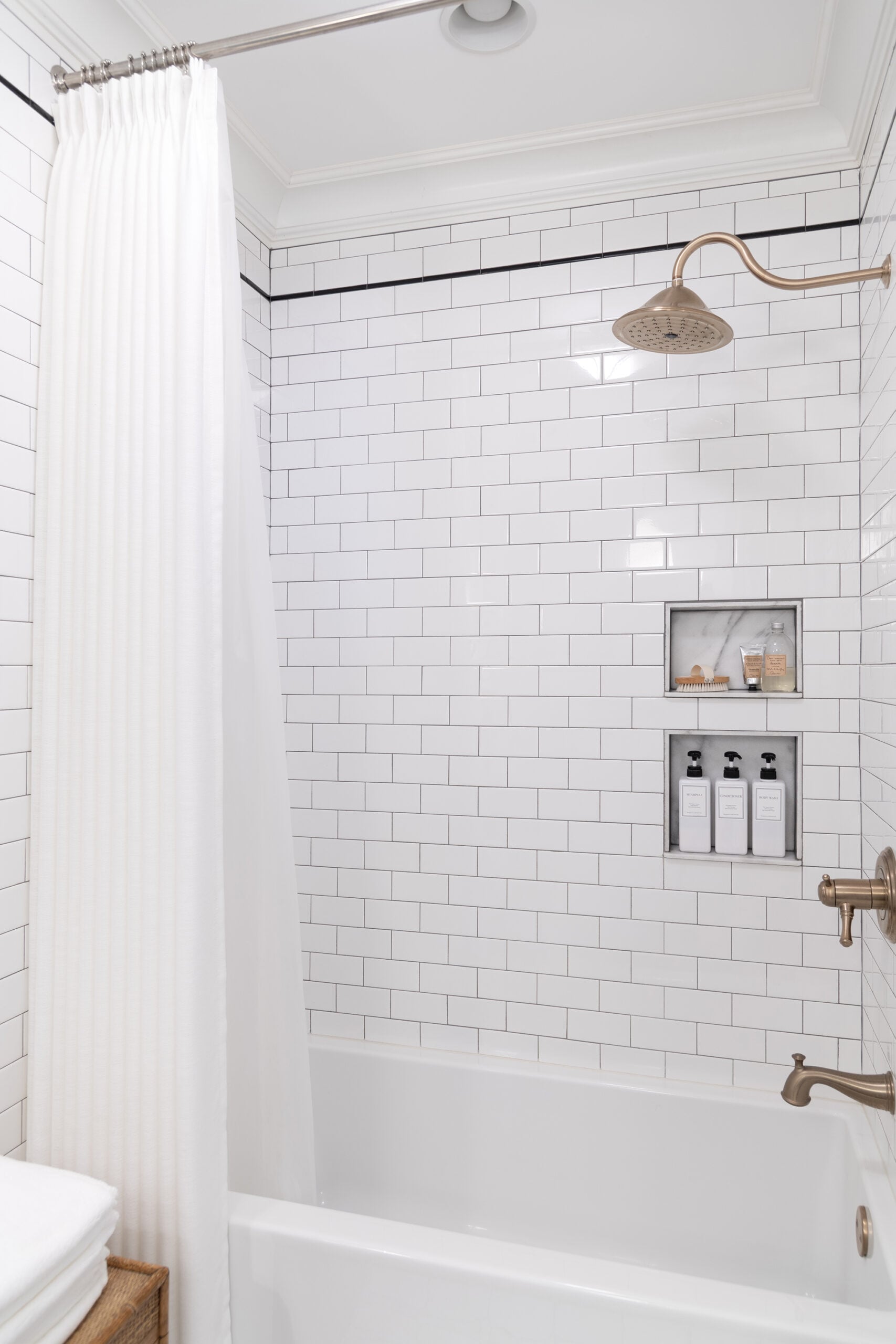
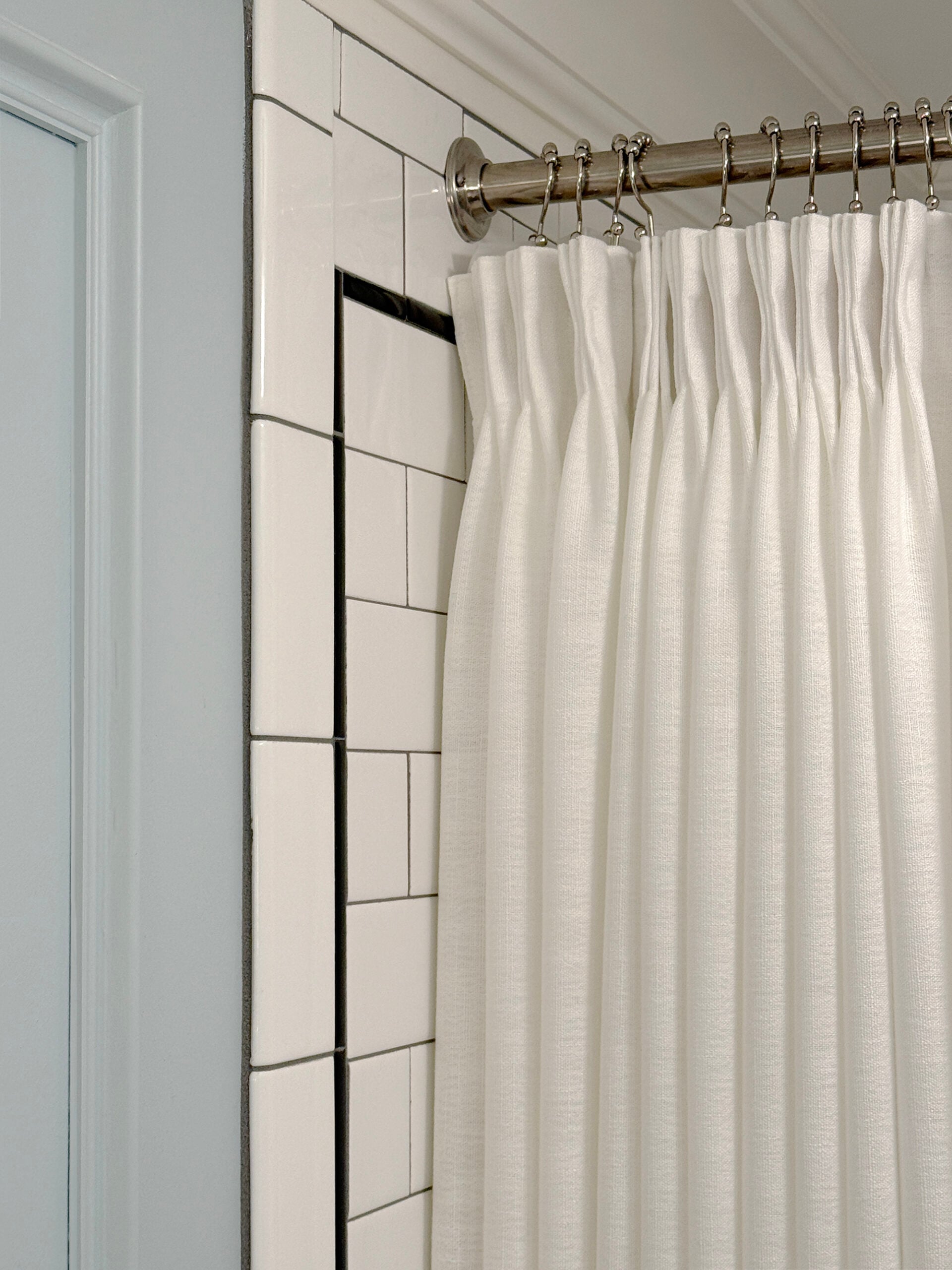
I treat shower curtains exactly like drapery panels. That means hanging the rod higher than most people expect, choosing enough fabric to create soft folds, and allowing the curtain to float just above the floor. It’s the same principle I use throughout our house. You wouldn’t hang living room curtains halfway down the wall. Bathrooms get the same attention to detail. Raising the rod draws your eye upward, making the ceiling appear taller, and gives the room a softer, architectural feel. How? The higher rod creates the illusion of taller ceilings. The longer fabric adds softness. The fullness introduces texture and movement. None of those changes require new tile or a renovation. It’s one of those upgrades that people often can’t identify, but they’ll immediately notice the room feels more better designed.
Planning & Ordering a Two Pages Shower Curtain
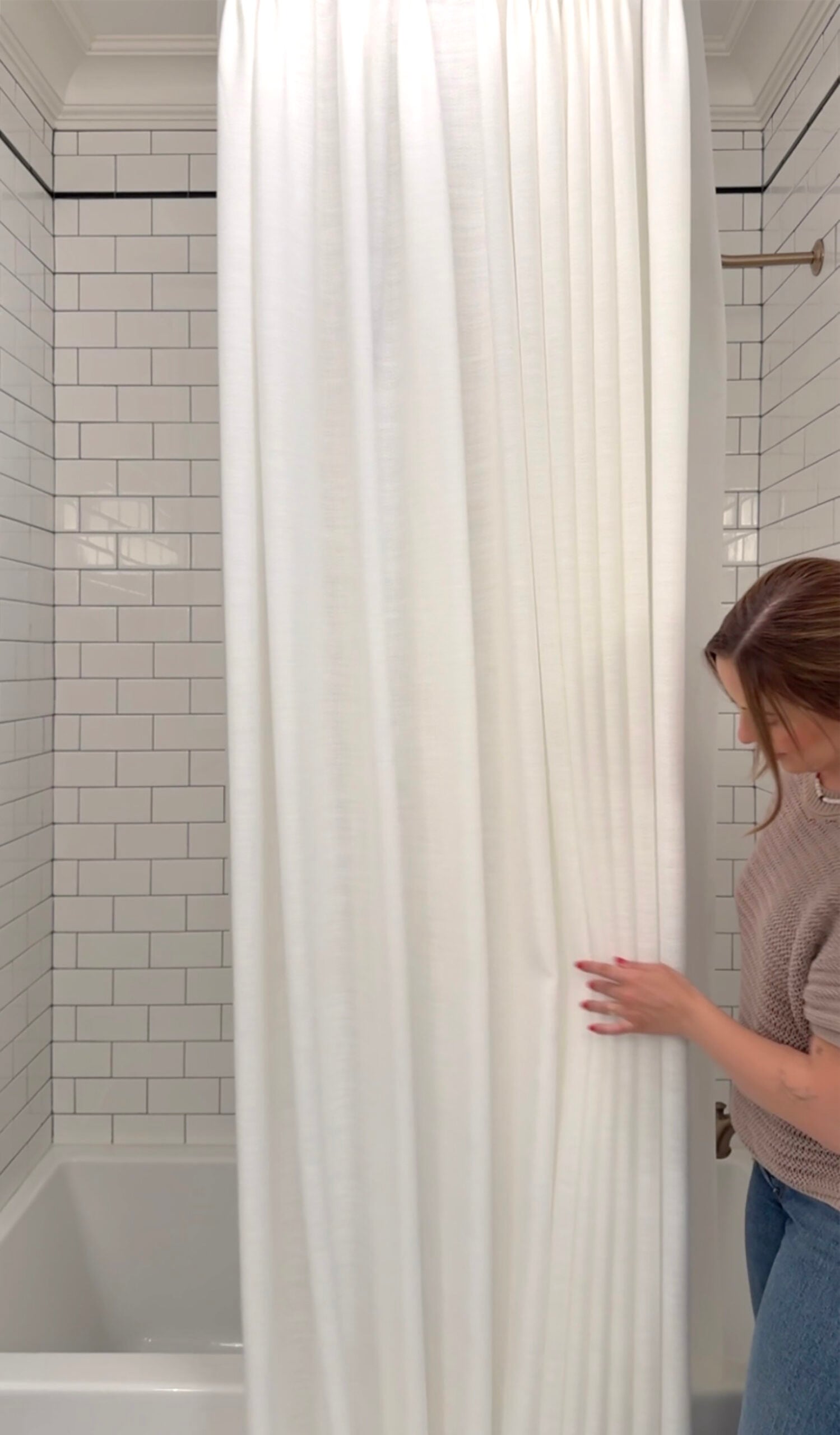
I always recommend deciding where you want your curtain rod before measuring anything. Start with the finished look you’re trying to achieve. Once your rod location is determined, measure from the top of the rod to the floor. I prefer the curtain to float just above the floor for a tailored look. However, I add a 1/2″ of negative space in a bathroom… just to account for material stretch (so barely shorter than a normal curtain). Being a bathroom, I do NOT want my curtain hem to get wet. Puddling isn’t a good thing in this context.
Next, measure the overall width of your shower opening. Don’t forget about fullness. A little extra fabric creates softer folds, which always looks more expensive than a perfectly flat panel. Once you have those two measurements, you’re ready to place your order. Here’s a quick recap…
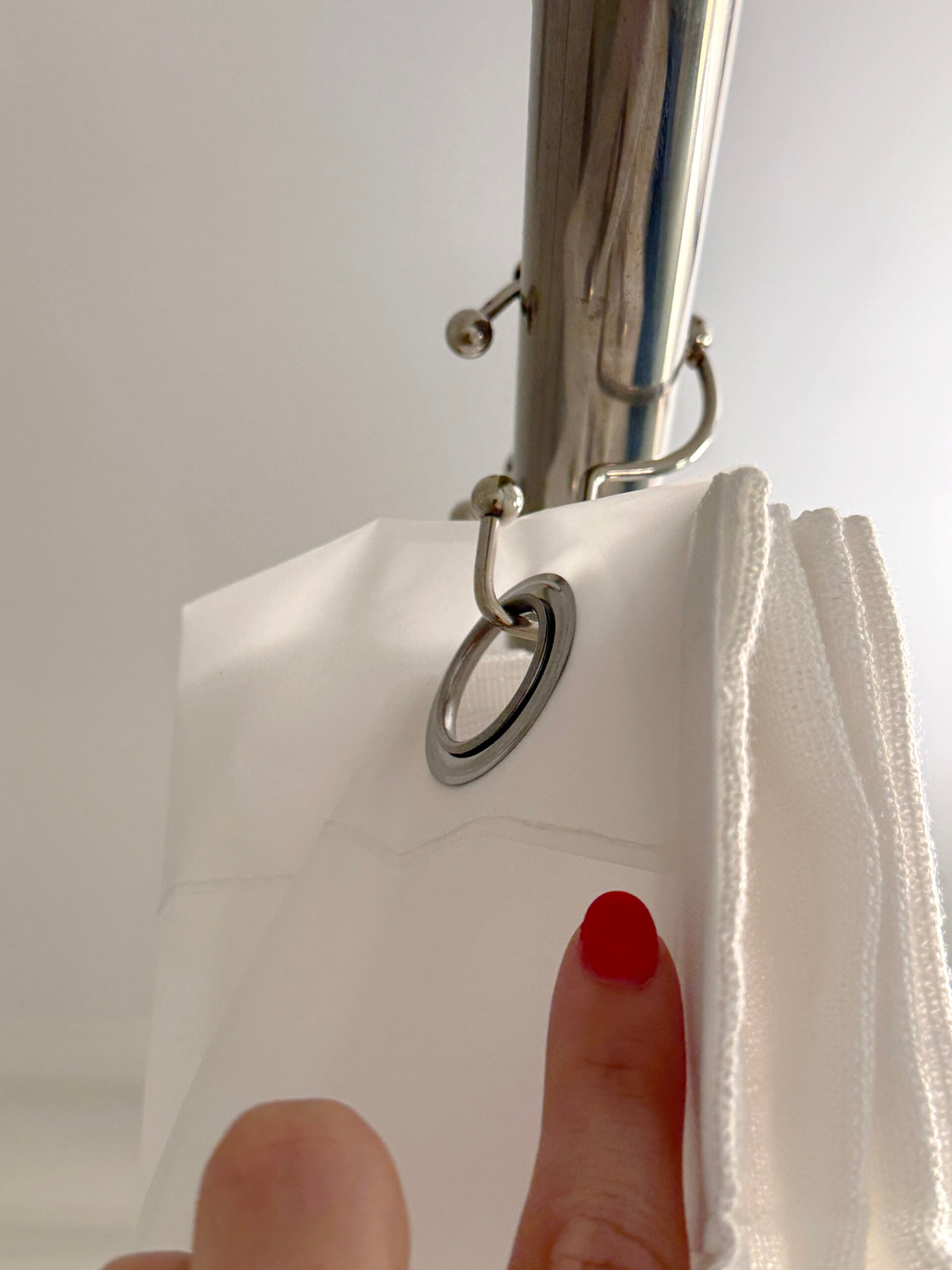
Exact Links
I wanted to link everything I used, so you can replicate the look. From my rings to the curtain itself, this is what I purchased:
- Shower Rod
- Shower Hooks or Rings
- Curtain Hooks
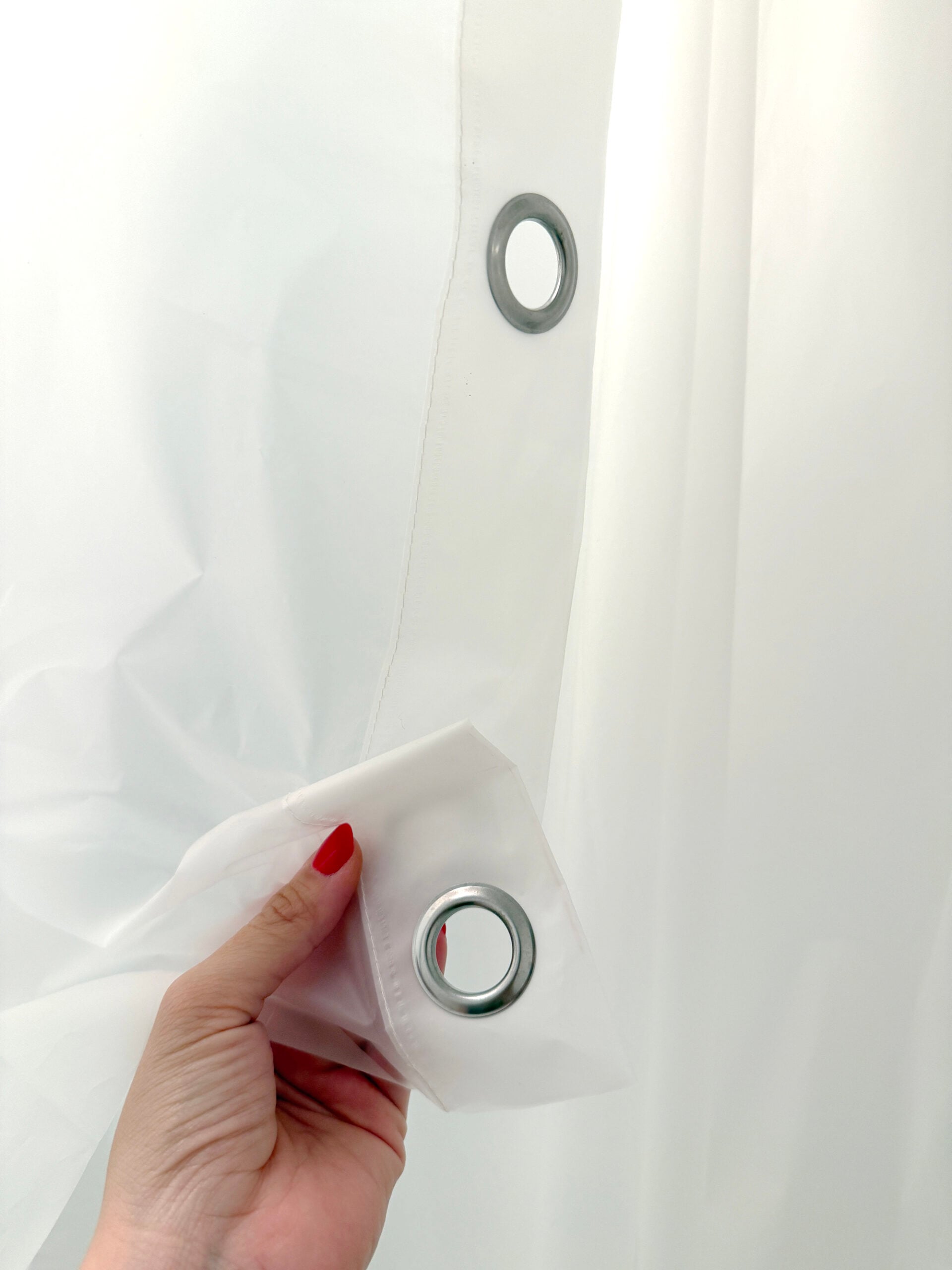
- Shower Curtain (Kyla fabric in Warm White, Triple Pleat… comes with the waterproof liner)
How to Measure for a Two Pages Shower Curtain
- First, decide where you want to install the curtain rod.
- Measure from the top of the rod to the floor for your finished length.
- Measure the width of your shower opening (I recommend ordering enough width to create soft, full folds rather than a flat panel).
Installation Tips for the Best Finished Look
Installing a custom shower curtain isn’t much different than installing a standard one. The difference comes from the planning. Here are the details that make the biggest impact…
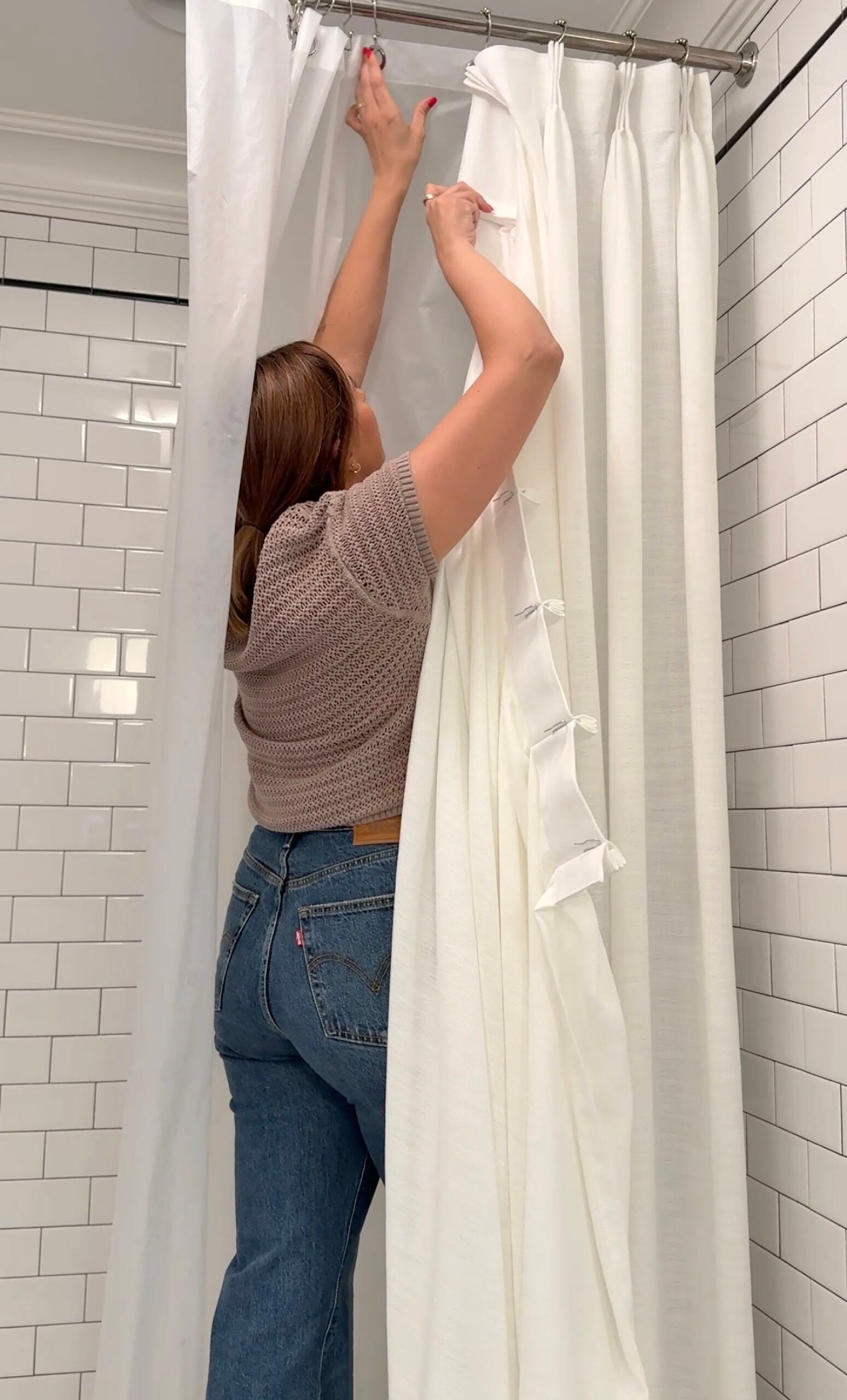
- Mount the curtain rod as high as your space allows.
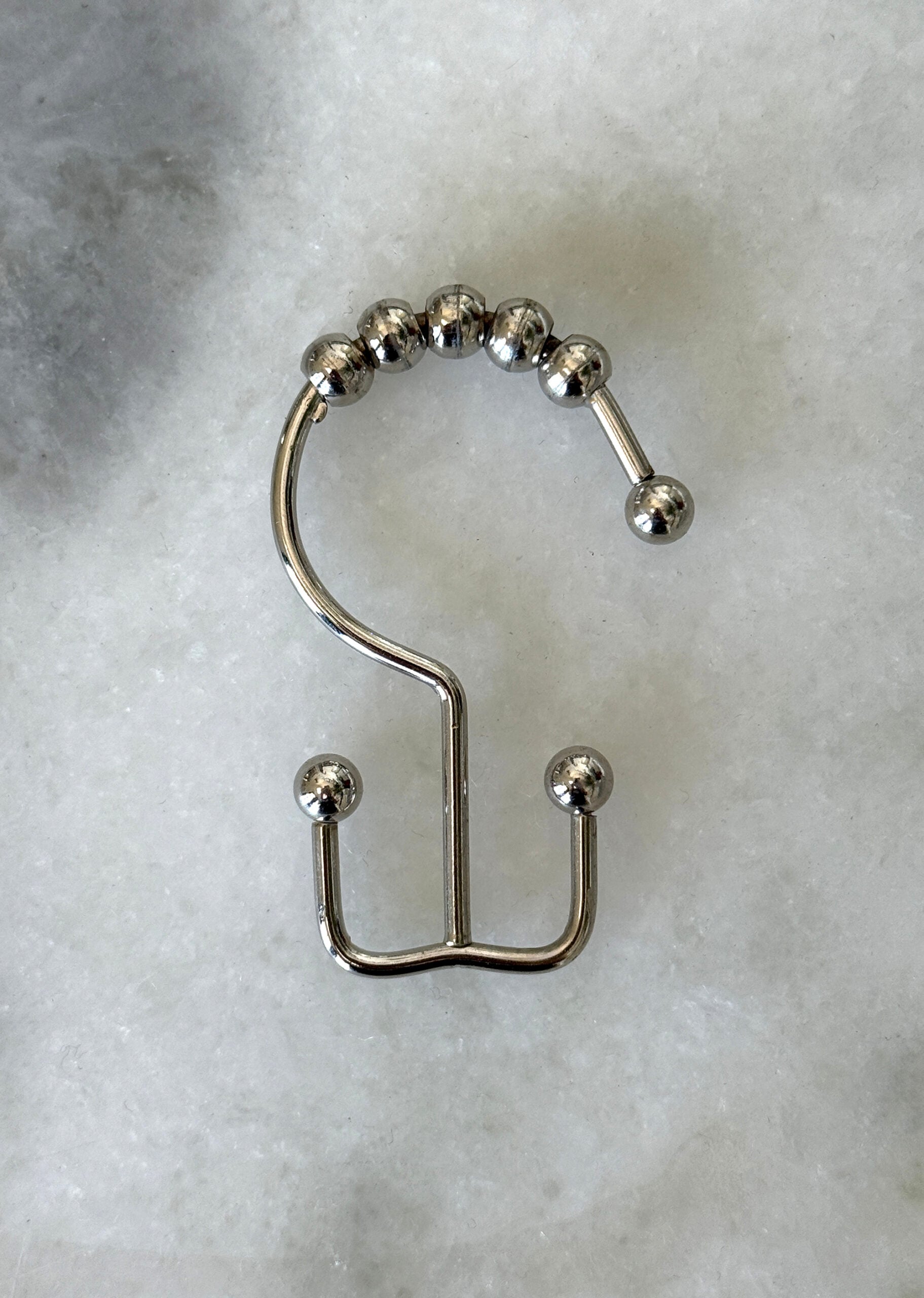
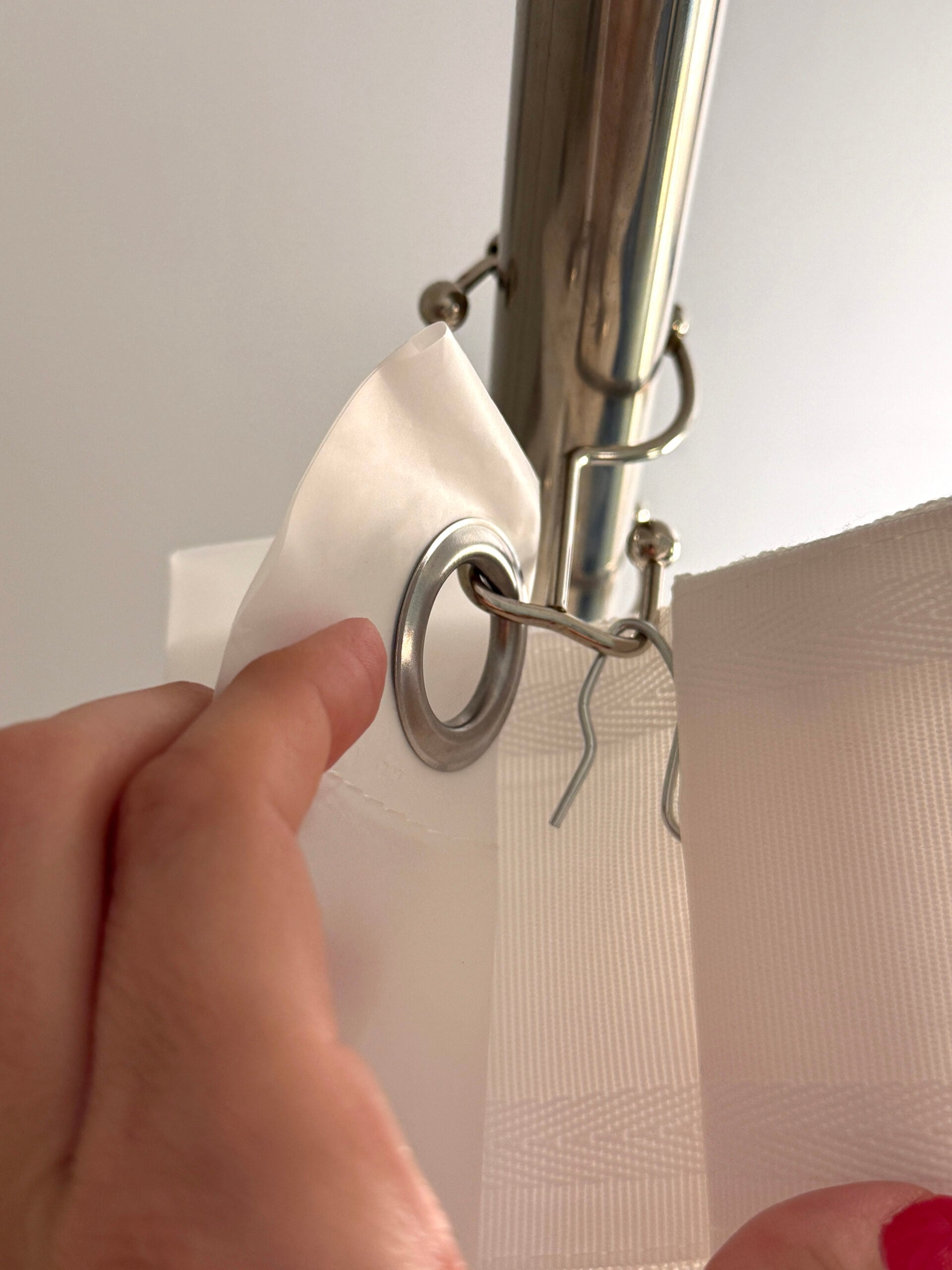
- Coordinate your curtain rings with your plumbing finishes. I use a double hook or ring— pictured below. You can see how the curtain hangs from one side, and the liner from the other.
- Use a quality waterproof liner behind the decorative curtain.
- Steam the fabric after installation so it hangs naturally from the first day.
These small details are what make the finished bathroom feel polished instead of builder grade or readymade.
Is a Two Pages Custom Shower Curtain Worth It?
For me, absolutely. It saved me a ton of time, and I’d order from them again based on the quality and craftsmanship. The fabric has beautiful weight, the construction is excellent, and having the ability to customize every measurement makes all the difference. While it’s more expensive than making your own, it’s definitely far more convenient. It’s one of those finishing touches that easily pulls the entire room together.
Questions?
Yes! The waterproof liner comes with the Two Pages shower curtain, but they’re totally separate. It protects the fabric from moisture.
I like a curtain that’s about 1.5 times the width of the shower opening. That extra fabric creates soft folds and gives it the appearance of custom drapery.
I almost always recommend mounting the rod as high as possible while still feeling proportional to the room. Hanging the rod closer to the ceiling draws your eye upward and makes the bathroom feel larger and more custom.
I prefer the curtain to just barely float above the floor. It creates a tailored, designer look without puddling or collecting moisture.
I recommend choosing a medium weight fabric with some texture, similar to what you’d use for window treatments. Linen blends and textured woven fabrics tend to hang beautifully and give the bathroom a softer feel. Since you’ll use a waterproof liner behind it, you can prioritize appearance over water resistance.
I see people mount the curtain rod too low, choose a curtain that’s too narrow, or stop the fabric several inches above the floor. Fixing those three things alone can completely change the look of a bathroom.
Related Bathroom Posts
Looking for more helpful bathroom renovation posts? I’m going to link a bunch of my favorites for you below!
- Why an Exhaust Fan & Light Combo Is the Best Choice for Bathroom Renovations
- Standard Bathroom Dimensions To Know Before Renovating
- How to Plan and Design a Shower Niche
- How to Make a Small Bathroom Look Larger
- Classic Bathroom Plumbing Fixtures from Wayfair
- How to Style a Bathroom That Feels Like a Boutique Hotel
- How to Properly Light a Bathroom for Function and Design
- 20 Bathroom Remodeling Tips… Before You Begin Your Renovation
- Stocking a Guest Bathroom: Essentials for Visitors
- Bathtub Refinishing Process & Reglazing A Tub White
I’ve always believed the rooms that feel the most pulled together aren’t necessarily the ones with the biggest budgets. They’re the ones where someone paid attention to the details… custom shower curtain included. Treating it like drapery instead of an afterthought completely changes the way a bathroom looks. The proportions are better, the room feels taller, and the entire space takes on a more elevated look. The Two Pages custom shower curtain was a win in my book. I’d buy another! Being able to customize every measurement meant I wasn’t compromising the design to fit a standard size. I hope this is helpful!
I love Two Pages! I ordered linen curtains from them for my primary slider and couldn’t be happier! The pleats are absolutely perfect, the linen is gorgeous weight and feel, and I love their memory shape option. I’ll be ordering from them again for sure. I have wondered about their shower curtains, and would love to try those out as well. For anyone considering, you can order fabric sample booklets directly from their site- there’s so many options to choose from! You may have just persuaded me to pull the trigger on a custom one for our primary bath Sarah- thank you for sharing!